
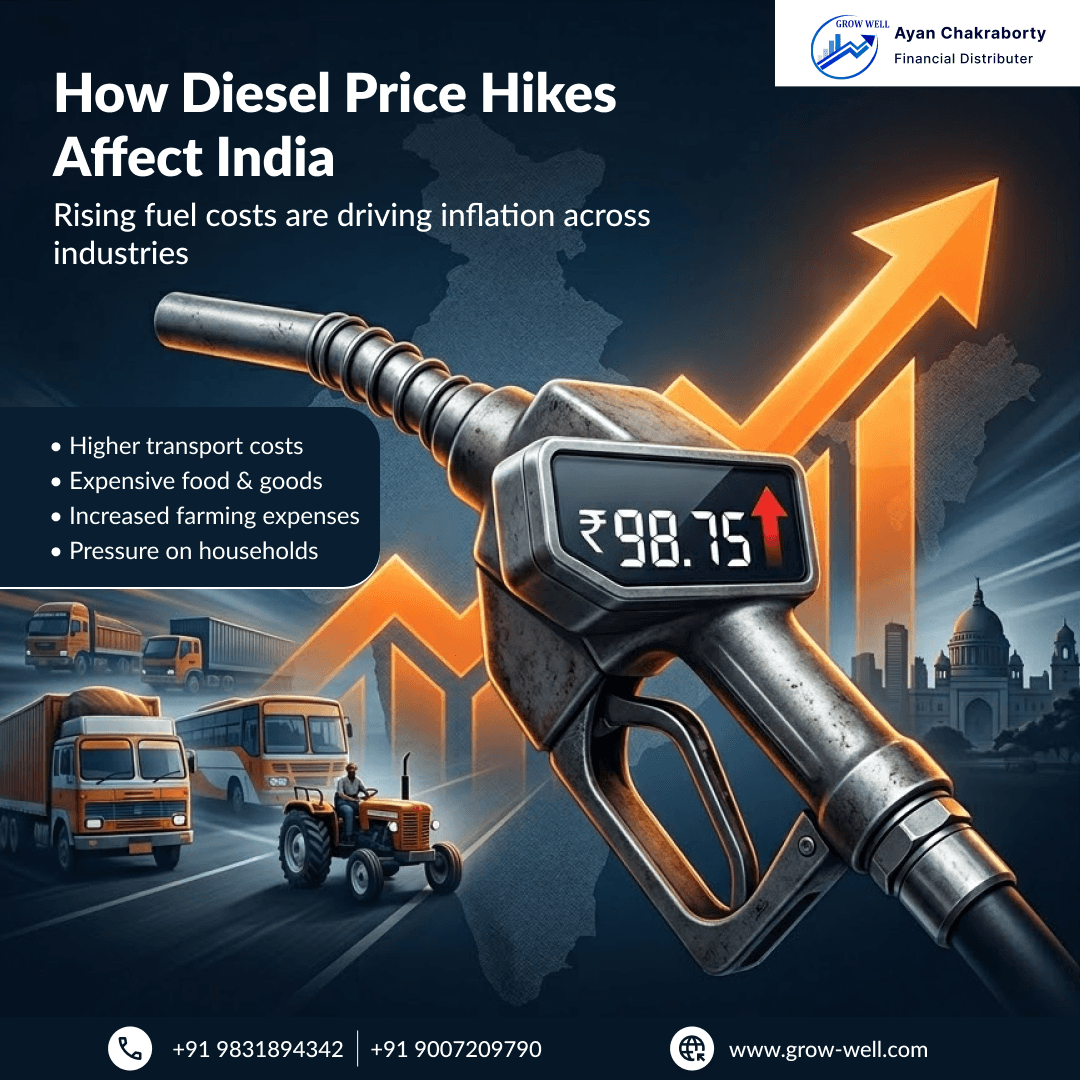
How Repeated Diesel Price Hikes Affect the Indian Econom
Diesel is a crucial fuel in India, as it powers a wide range of vehicles and machinery, including trucks, buses, tractors, generators, trains, and many industrial machines.
When diesel prices rise multiple times, the effects ripple through almost every sector of the economy.Recently, these frequent diesel price hikes have caused worries among businesses, transporters, farmers, and everyday citizens.
Why Diesel Prices Increase in India
There are several factors that lead to the rising cost of diesel in India:
- Higher global prices for crude oil
- Increased taxes imposed by both the central and state governments
- A weakening Indian rupee against the US dollar
- Global geopolitical issues and supply chain disruptions
- Growing costs related to transportation and refining processes
India relies heavily on importing crude oil, so any change in international prices directly influences the cost of diesel within the country.
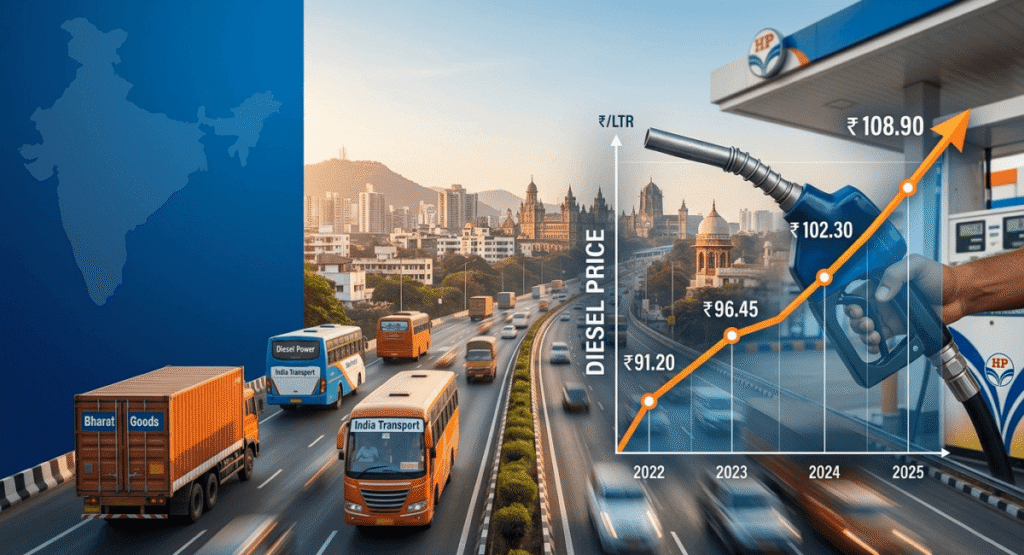
Major Effects of Diesel Price Hike on the Indian Economy
1.Increase in Transportation Costs
Diesel is the main fuel used for trucks, buses, and commercial vehicles.
As its price rises, transportation companies raise their freight charges.This leads to increased logistics expenses and higher delivery costs for everyday items like vegetables, fruits, milk, medicines, and packaged goods.
2.Rise in Inflation
Higher diesel prices directly contribute to inflation.
Since transportation plays a role in almost every industry, businesses often pass on the extra fuel costs to consumers.This results in:
– More expensive food items
– Increased manufacturing costs
– Higher retail prices
– Reduced capacity of people to buy goods
Inflation particularly impacts the middle-class and lower-income families, making it harder for them to afford basic necessities.
3. Impact on Farmers and Agriculture
Indian agriculture depends heavily on diesel-powered equipment such as tractors, irrigation pumps, harvesting machines, and transport vehicles.
When diesel prices go up, these costs increase, making farming more expensive.This can lead to higher crop transportation costs and lower profit margins for farmers.Ultimately, this may also push up the prices of food in the market.
4. Higher Cost of Public Transportation
Public and private transport systems, including buses, taxis, and auto-rickshaws, rely on diesel.
Constant price hikes force transport operators to raise fares.This affects:
– Commuters going to work
– Students traveling to school
– Workers in small businesses
– Rural transport services
Higher travel expenses can reduce household savings, putting additional financial pressure on families.
5. Negative Impact on Small Businesses
Small and medium-sized businesses face rising operational costs due to:
– Increased transportation expenses
– Higher electricity costs for backup generators
– More expensive delivery charges for raw materials
Many of these businesses find it challenging to maintain profitability during prolonged periods of fuel price increases.
6. Industrial Production Costs Increase
Industries like manufacturing, construction, mining, and logistics use diesel-powered machinery.
When diesel prices rise:
– Production costs go up
– Industrial profit margins shrink
– Business expansion slows down
– Employment opportunities may decrease
This can lead to a slowdown in economic growth and affect the overall health of the economy.
7. Pressure on Household Budgets
When diesel prices go up, it leads to:
– More expensive food items
– Costlier transportation
– Higher delivery charges for online services
– Increased utility and service fees
Families may have to cut back on non-essential spending, which can reduce consumer demand in the economy.
Positive Effects of Higher Diesel Prices
Despite the challenges, there are some positive outcomes associated with higher diesel prices:
– Encouragement for Alternative Energy
Higher fuel costs encourage:
– Adoption of electric vehicles (EVs)
– Increased use of solar energy
– Development of cleaner transportation systems
Reduction in Fuel Consumption
People and businesses may become more efficient in using fuel and reduce wastage.
Government Revenue Growth
Fuel taxes generate significant revenue for the government, which can be used for:
– Infrastructure development
– Public welfare programs
– Road and transport projects
Long-Term Economic Concerns
If diesel prices continue to increase frequently, there could be several long-term economic issues:
– Inflation may remain high
– Economic growth could slow down
– Consumer spending may decrease
– Businesses might delay investments
– India’s competitiveness in exports could weaken
– Sectors like transportation, agriculture, and manufacturing may face long-term financial difficulties
Conclusion
Repeated diesel price hikes have far-reaching effects on the Indian economy because diesel is deeply connected to transportation, agriculture, industries, and daily life.
Rising fuel prices increase inflation, transportation costs, and business expenses, ultimately affecting common people and hindering economic growth.
To reduce the long-term impact, India may need to invest in renewable energy, electric mobility, public transport, and fuel-efficient infrastructure.
Balancing fuel pricing with economic stability will be an important challenge for policymakers in the coming years.