
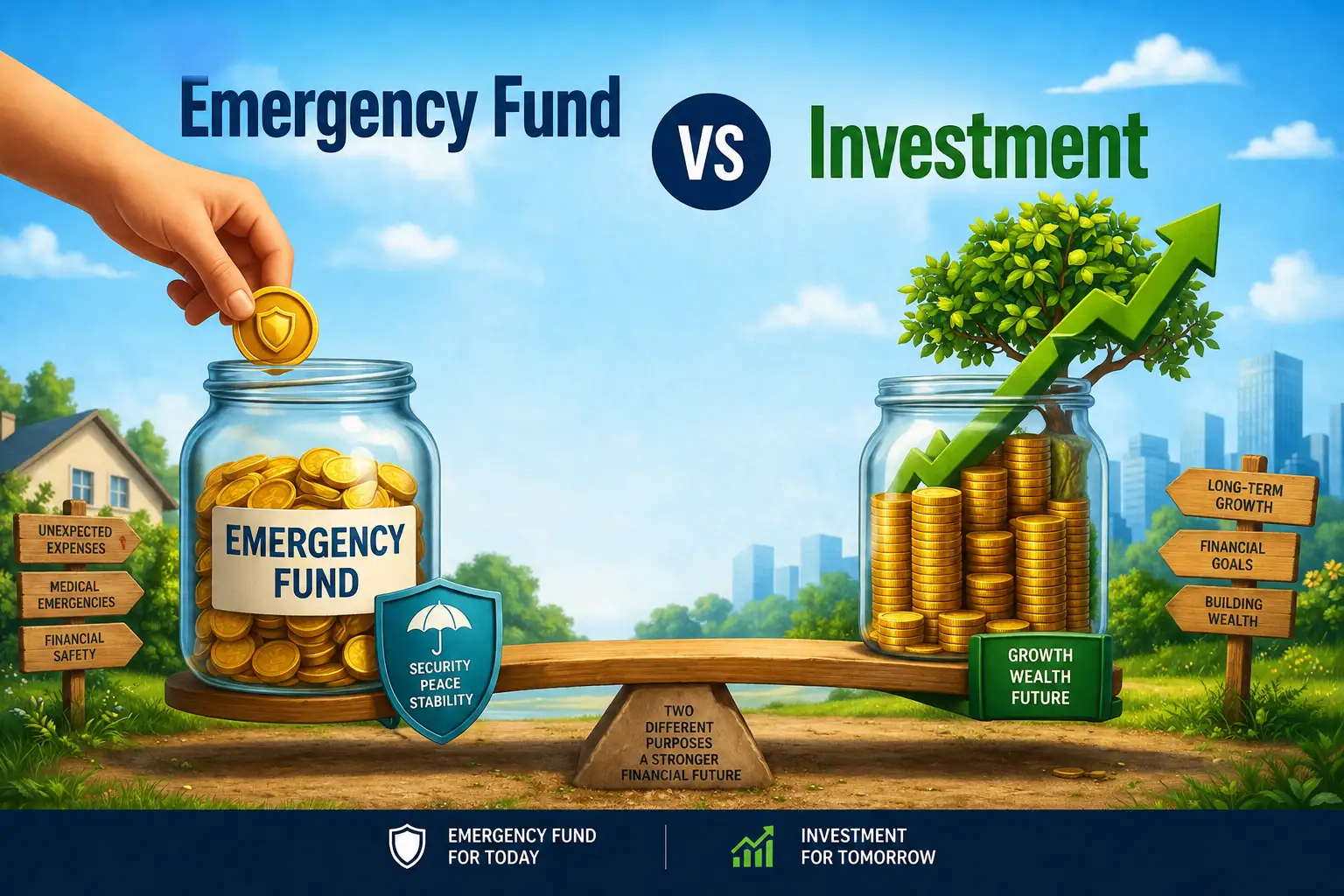
Emergency Fund vs Investment: What Should Come First?
Introduction
One of the biggest financial dilemmas people face is deciding whether to build an emergency fund first or start investing immediately. While both are essential for achieving financial stability, understanding their purpose can help you make the right decision.
An emergency fund acts as your financial safety net during unexpected situations, while investments help you grow your wealth and achieve long-term financial goals. Striking the right balance between the two is the key to a healthy financial future.
In this article, we’ll explain the difference between an emergency fund and investments, why both matter, and how to prioritize them based on your financial situation.
What Is an Emergency Fund?
An emergency fund is money set aside specifically to cover unexpected expenses or financial emergencies. It is not meant for planned expenses like vacations, buying gadgets, or shopping.
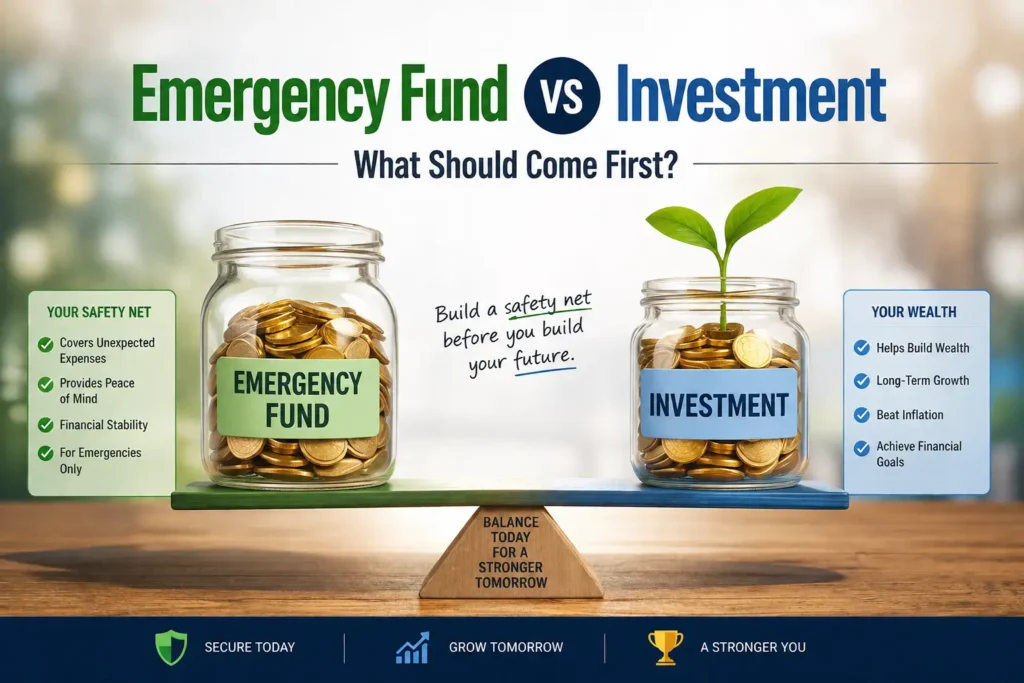
Common situations where an emergency fund can help include:
- Medical emergencies
- Job loss or reduced income
- Urgent home repairs
- Car repairs
- Family emergencies
- Unexpected travel expenses
The primary purpose of an emergency fund is to provide financial security without forcing you to borrow money or sell your long-term investments.
What Is Investment?
Investment involves putting your money into financial instruments such as mutual funds, stocks, bonds, or other assets with the objective of growing your wealth over time.
People invest for goals such as:
- Buying a house
- Child's education
- Retirement planning
- Wealth creation
- Starting a business
- Achieving financial independence
Unlike an emergency fund, investments are designed to generate returns over the long term and may fluctuate in value.
Emergency Fund vs Investment: What's the Difference?
Emergency Fund vs. Investment
Emergency Fund
- ✓Meant for unexpected expenses
- ✓High liquidity
- ✓Focus on capital safety
- ✓Low risk
- ✓Used during emergencies
Investment
- ✓Meant for long-term wealth creation
- ✓May have limited liquidity depending on the investment
- ✓Focus on growth and returns
- ✓Risk varies depending on the investment type
- ✓Used to achieve financial goals
Both play different but equally important roles in your financial plan.
Why Should You Build an Emergency Fund First?
Before investing aggressively, it’s generally advisable to have an emergency fund in place. Here’s why:
1. Financial Security
Unexpected events can happen at any time. Having emergency savings reduces financial stress and helps you manage unforeseen expenses without disrupting your long-term plans.
2. Prevents Debt
Without emergency savings, many people rely on:
- ✓Credit cards
- ✓Personal loans
- ✓Borrowing from friends or family
These options often come with financial costs or obligations that can be avoided with adequate emergency savings.
3. Protects Your Investments
Imagine the stock market declines and you suddenly need money for a medical emergency. Without an emergency fund, you may have to redeem your investments at an unfavorable time.
A dedicated emergency fund allows your investments to remain invested and continue working toward your long-term goals.
How Much Should Your Emergency Fund Be?
Financial planners often recommend maintaining an emergency fund equivalent to 3–6 months of essential living expenses.
If your income is irregular or you have significant financial responsibilities, you may choose to build a larger emergency fund.
For example:
| Monthly Essential Expenses | Suggested Emergency Fund |
|---|---|
| ₹30,000 | ₹90,000 – ₹1,80,000 |
| ₹50,000 | ₹1,50,000 – ₹3,00,000 |
| ₹75,000 | ₹2,25,000 – ₹4,50,000 |
| ₹1,00,000 | ₹3,00,000 – ₹6,00,000 |
These are illustrative examples and should be adjusted based on your individual circumstances.
Where Should You Keep Your Emergency Fund?
An emergency fund should be:
- ✓Easily accessible
- ✓Relatively low risk
- ✓Separate from your daily spending account
Some commonly used options include:
- ✓Savings accounts
- ✓Liquid mutual funds
- ✓Sweep-in fixed deposits
- ✓Short-term deposits
The objective is quick access to funds while preserving capital.
When Should You Start Investing?
Once you’ve built a basic emergency fund, you can begin investing toward your long-term financial goals.
You don’t necessarily need to wait until you’ve accumulated a very large emergency fund.
A practical approach could be:
- ✓Build an initial emergency fund.
- ✓Start a monthly SIP for long-term goals.
- ✓Continue increasing both your emergency savings and investments as your income grows.
This approach helps balance financial security with wealth creation.
Can You Build an Emergency Fund and Invest at the Same Time?
Yes. If your cash flow allows, you can allocate part of your monthly savings toward an emergency fund and part toward investments.
Sample Monthly Allocation:
The allocation should depend on your financial goals, existing savings, and comfort level.
Common Mistakes to Avoid
Avoid these common financial planning mistakes:
- ✕ Investing all your savings without keeping emergency reserves
- ✕ Using emergency funds for non-essential purchases
- ✕ Keeping emergency funds in high-risk investments
- ✕ Delaying investments indefinitely while chasing an excessively large emergency fund
- ✕ Ignoring inflation and periodic financial reviews
A balanced approach usually works better than focusing exclusively on one objective.
Tips for Better Financial Planning
Track Your Expenses
Understanding where your money goes helps determine how much you can save and invest.
Automate Your Savings
Set up automatic transfers for both your emergency fund and SIP investments.
Increase Savings with Income Growth
Whenever your salary increases, consider increasing both your emergency savings (if needed) and your investment contributions.
Review Regularly
Review your emergency fund and investment portfolio annually or after major life events such as marriage, a new job, or the birth of a child.
Final Thoughts
The question isn’t “Emergency Fund or Investment?” it’s “How can I build both well?”
An emergency fund gives you stability during uncertain times, while investments help you reach goals like buying a house, paying for your child’s education, or planning for retirement.
For most people, it makes sense to set up a basic emergency fund before investing a lot.
Once that safety net is in place, you can start investing regularly through methods like SIPs to grow your money over time.
A good financial plan includes protection today and growth for tomorrow.
Frequently Asked Questions (FAQs)
Should I build an emergency fund before investing?
How much should I keep in an emergency fund?
Can I invest while building an emergency fund?
Should I use my mutual fund investments during emergencies?
If possible, use your emergency fund first.Using long-term investments for short-term needs may mess up your goals and could lead to selling at a bad time.
Where is the best place to keep an emergency fund?
Emergency money is usually kept in safe, easy-to-reach places like savings accounts, liquid mutual funds, or sweep-in fixed deposits so it’s available when needed.