
How Market Volatility Affects Mutual Funds: A Complete Guide for Investors
Introduction
If you’ve invested in mutual funds, you’ve probably noticed that the value of your investments doesn’t move in a straight line. Some days your portfolio grows, while on others it may decline. These fluctuations are a normal part of investing and are known as market volatility.
For many investors, especially beginners, market volatility can be unsettling. However, understanding why it happens and how it affects mutual funds can help you make informed decisions and avoid emotional investing.
In this guide, we’ll explain what market volatility is, how it impacts different types of mutual funds, and the strategies investors can use to stay focused on their long-term financial goals.
What Is Market Volatility?
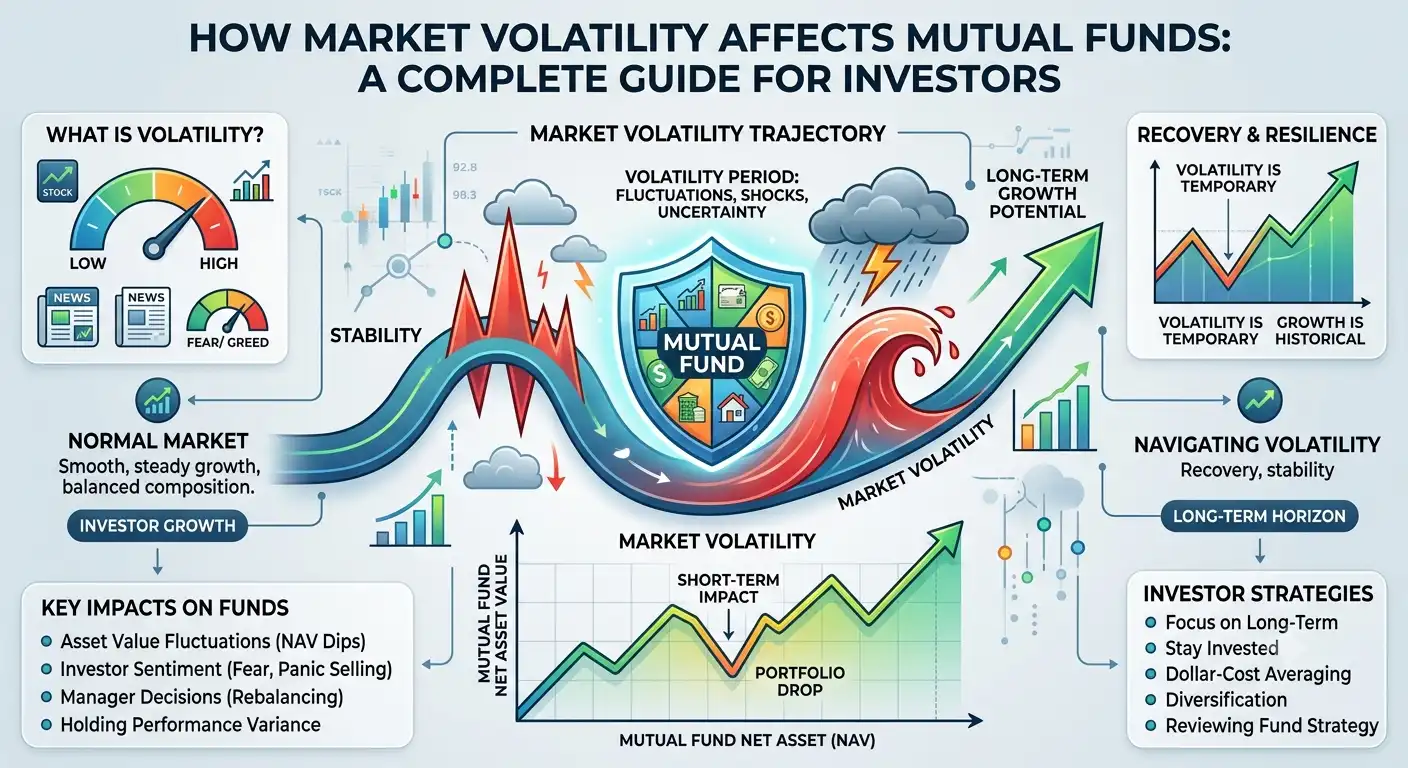
Volatility is influenced by several factors, including:
- Economic conditions
- Inflation and interest rate changes
- Corporate earnings
- Government policies
- Global events
- Geopolitical tensions
- Investor sentiment
While volatility may create uncertainty in the short term, it is a natural feature of financial markets.
How Does Market Volatility Affect Mutual Funds?
Since mutual funds invest in financial securities such as stocks and bonds, changes in market prices directly affect the value of the fund.
During periods of high volatility:
- Equity mutual funds may experience larger fluctuations in value.
- Debt mutual funds may be affected by changes in interest rates and bond prices.
- Hybrid funds may experience moderate fluctuations because they invest in both equity and debt.
The impact depends on the type of mutual fund and the assets it holds.
Impact on Different Types of Mutual Funds
Impact on Different Types of Mutual Funds
1. Equity Mutual Funds
These kinds of funds mainly invest in company shares.
When the market falls, the value of these funds might drop because stock prices go down. But when the market goes up, they can also rise a lot.
Key Characteristics:
- ✓More short-term ups and downs
- ✓More potential for long-term growth
- ✓Good for people with long-term goals
2. Debt Mutual Funds
Debt funds invest in fixed-income things like government and corporate bonds.
Although they’re generally less volatile than equity funds, they can still be affected by:
- ✓Changes in interest rates
- ✓Risk of companies not paying back their debt
- ✓Conditions in the bond market
Debt funds usually don’t go up and down as much as equity funds.
3. Hybrid Mutual Funds
Hybrid funds mix equity and debt investments.
Because of this mix, they tend to be less volatile than funds that only invest in stocks but still offer growth.
They might be a good option for those who want a balance between risk and return.
Why Market Volatility Won’t Hurt Long-Term Investors
One big mistake investors make is reacting emotionally when the market goes down.
History shows that markets have been volatile many times, but they often recover in the long run. People who keep investing and stay disciplined are usually better off than those who stop out of fear.
Even though past performance doesn’t mean the future will be the same, keeping a long-term view can help you deal with uncertainty.
How SIP Helps During Market Volatility
A Systematic Investment Plan (SIP) is helpful during volatile times.
With SIP, you invest a fixed amount at regular times, no matter what’s happening in the market.
Benefits During Volatility
- ✓ Encourages regular investing
- ✓ Helps avoid trying to pick the best time to invest
- ✓ Lets you buy more units when prices are low and fewer when they’re high (rupee cost averaging)
- ✓ Helps build wealth over time
This approach can make the impact of short-term market changes less noticeable over time.
Common Reasons Behind Market Volatility
There are several reasons why the market might become volatile:
- ✓Inflation: Rising inflation can affect company profits and what investors expect.
- ✓Interest Rate Changes: Changes in rates set by central banks can influence stock and bond prices.
- ✓Global Events: Wars, pandemics, natural disasters, and international conflicts can add uncertainty.
- ✓Corporate Earnings: Strong or weak financial results from companies can affect market feelings.
- ✓Government Policies: Budgets, tax changes, and new rules might affect different industries.
- ✓Investor Sentiment: Fear or excitement can lead to quick buying or selling, making the market change faster.
Should You Stop Your SIP During Market Corrections?
In most cases, stopping your SIP just because the market is down might not be good for your long-term goals.
Keeping your SIP going during market declines helps you buy more units at lower prices.
For investors with long-term goals, staying consistent is a good way to handle market changes.
However, any decision should be based on your financial goals, how much money you have to spend, and how much risk you’re comfortable with, not just short-term market changes.
Strategies to Handle Market Volatility
Stay Focused on Your Goals
Remember why you started investing.
If your goal is retirement or your child’s education in a few years, short-term market changes may not have much effect on your overall plan.
Continue Your SIP
Regular investing helps you stay disciplined and decides not to act out of emotion.
Diversify Your Portfolio
Don’t put all your money in one area, company, or type of fund. Spreading out your investments can help with risk.
Review, Don’t React
Check on your investments now and then to make sure they still match your financial goals. Avoid making quick choices just because the market is going up or down one day.
Maintain an Emergency Fund
Having money set aside for emergencies can help you avoid needing to take money out of long-term investments during bad times.
Common Mistakes Investors Make During Volatility
- ✕ Stopping SIPs when the market drops
- ✕ Selling investments in panic
- ✕ Trying to guess where the market is going
- ✕ Investing based on rumors or trends from social media
- ✕ Not diversifying enough
- ✕ Switching funds too often
- ✕ Forgetting your long-term financial goals
These actions can sometimes hurt the effectiveness of your long-term investment plan.
How a Financial Advisor Can Help
A qualified financial advisor can help you:
- ✓ Understand your risk level
- ✓ Choose good mutual funds
- ✓ Make a balanced portfolio
- ✓ Keep track of your investments
- ✓ Stay calm during volatile times
- ✓ Make your investments fit your goals
Professional help can be especially useful during uncertain times in the market.
Final Thoughts
Market changes and ups and downs are part of investing, but they don’t have to stop you from reaching your financial goals.
Knowing how different types of mutual funds react to market changes, staying focused on the long term, and investing regularly can help you deal with uncertain times more confidently.
Instead of getting worried by every market change, keep your eyes on your goals, spread your investments across different types of assets, and check on your portfolio from time to time.
Staying patient and sticking to a plan are often the most important things for building wealth over time.
Frequently Asked Questions (FAQs)
What is market volatility?
Do all mutual funds get affected by market volatility?
Should I stop my SIP when the market falls?
Can market volatility be avoided?
How often should I review my mutual fund portfolio?
Checking your portfolio at least once a year is usually a good idea.
You should also review it after major life events like a job change, getting married, or planning for retirement.